Nordic Startup News Early Stage Startup News From The Nordics

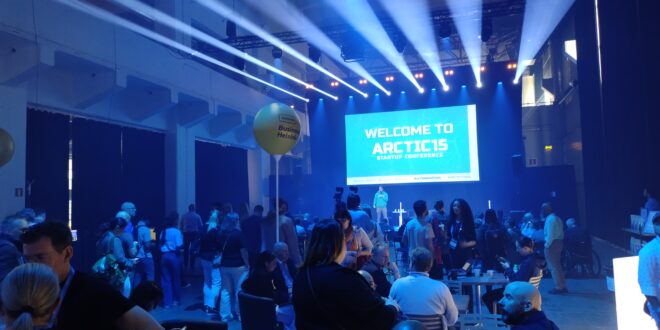
Helsinki — The European startup landscape has undergone a profound transformation over the last decade and a half. What was once a fragmented ecosystem of localized tech hubs has matured into a deeply interconnected, cross-border network. At the center of this evolution in the Nordic and Baltic regions has been Arctic15, an annual gathering that has quietly subverted the typical, high-volume tech conference model in favor of a more deliberate, deal-driven environment. As it reaches its 15th anniversary, the event serves as a useful case study in how startup conferences must adapt to remain relevant to founders and institutional investors alike.
When Arctic15 first launched, the regional challenge was primarily about visibility—putting Nordic innovation on the map for global venture capital. Today, the challenge is navigating market maturity and macroeconomic shifts. The event’s longevity stems from its foundational pivot away from massive, generalized audiences and toward highly curated, transactional matchmaking. By focusing on the mechanics of the deal rather than the spectacle of the stage, it has carved out a distinct niche in Europe’s crowded event calendar, prioritizing relationship density over raw attendee counts.
The upcoming 15th-edition milestone provides an opportunity to reflect on how the needs of early-stage companies have shifted. Founders no longer require conferences simply to learn how to pitch; they require direct, unvarnished access to capital, corporate partners, and international distribution channels. Arctic15’s legacy is tied to this practical infrastructure, acting as a regional bridgehead that helps localized teams take their first genuine international steps across the Nordics, Baltics, and broader European markets.
Evolving the Conference Format
However, staying relevant for 15 years requires continuous iteration of the physical event experience. As digital networking tools have become ubiquitous, physical conferences face increasing pressure to justify the time and capital required to attend. For its 2026 iteration, the event is introducing a dedicated “Experience Zone” at its long-standing venue, Helsinki’s Kaapelitehdas (The Cable Factory). This structural shift moves away from traditional, passive exhibition booths toward an immersive, separated environment where attendees can interact with emerging technologies in a tangible format.
In tandem with this spatial redesign, the event is restructuring its startup showcase through a standardized evaluation framework. The newly introduced “Top 100 Innovations” initiative is designed to filter the regional ecosystem’s most promising early-stage companies based on measurable traction, technological creativity, and scalability. By formalizing this cohort, the conference aims to provide investors with a highly vetted, pre-screened directory of regional talent, saving critical deal-sourcing time in an environment where capital efficiency is paramount.
The competitive element of this cohort culminates on the main stage, where the top 30 selected startups will pitch directly to an international audience of venture capitalists, corporate venture arms, and media outlets. This format balances broad ecosystem visibility with deep-dive scrutiny. For the selected founders, it offers a concentrated injection of international exposure, while for the attending investors, it provides a real-time pulse check on the region’s current technological frontiers and entrepreneurial talent.
The Rise of Dual-Use and Defence Tech
Beyond format changes, the thematic focus of the conference is adapting to broader geopolitical and macroeconomic realities. Perhaps the most significant shift in the 2026 program is the explicit integration of defense and dual-use technologies into the core agenda. Historically, defense technology was siloed within specialized, state-sanctioned procurement ecosystems, largely isolated from mainstream venture capital and commercial startup accelerators.
Today, that paradigm is entirely obsolete. The most critical breakthroughs in autonomy, cyber security, artificial intelligence, sensor tech, and advanced materials are increasingly originating in universities and commercial software startups. However, these dual-use innovations frequently stall in the notorious “valley of death”—the gap between successful lab prototyping and scalable, real-world deployment within highly regulated defense frameworks.
The cross-pollination of commercial software agility and defense-grade reliability is no longer optional; it is a foundational pillar of modern macroeconomic and societal resilience.
To address this specific friction point, the conference is launching the Arctic15 Defence Summit. The initiative is structured to act as an ecosystem translator, bringing together institutional fund managers, commercial startups, academic researchers, and public defense stakeholders. The objective is to build the missing financial and operational pipelines required to transition dual-use technologies out of the laboratory and into active, scalable deployment.
Ultimately, this thematic expansion reflects a broader understanding of what innovation must achieve in the current era. It is no longer just about driving commercial growth or digital convenience; it is about fortifying societal resilience. As Arctic15 enters its 15th year, its evolution from a regional meetup to a critical node for cross-border capital and dual-use innovation underscores a deeper truth: the most successful ecosystems are those that can rapidly align entrepreneurial ambition with the pressing realities of the global landscape.